When you hear the word “security,” what comes to mind?
For most students, the image is clear: Soldiers at a border. Tanks on a parade. Spy satellites in space. Presidents signing treaties.
This is the traditional view of security. It is not wrong. But it is incomplete.
Imagine a mother in rural Sindh. Her worry is not a foreign army. Her worry is the tube well that has run dry. Her worry is the price of flour. Her worry is whether her daughter can walk to school without fear.
Is this not security? If her water runs out, her family cannot survive. If her daughter is unsafe, her community loses its future. Yet, in most university textbooks, these worries are called “social issues,” not “security issues.”
This is what we mean when we talk about decolonizing security studies. It is not about burning books or rejecting all Western ideas. It is about widening the lens. It is about asking: Whose security counts? And who gets to decide?
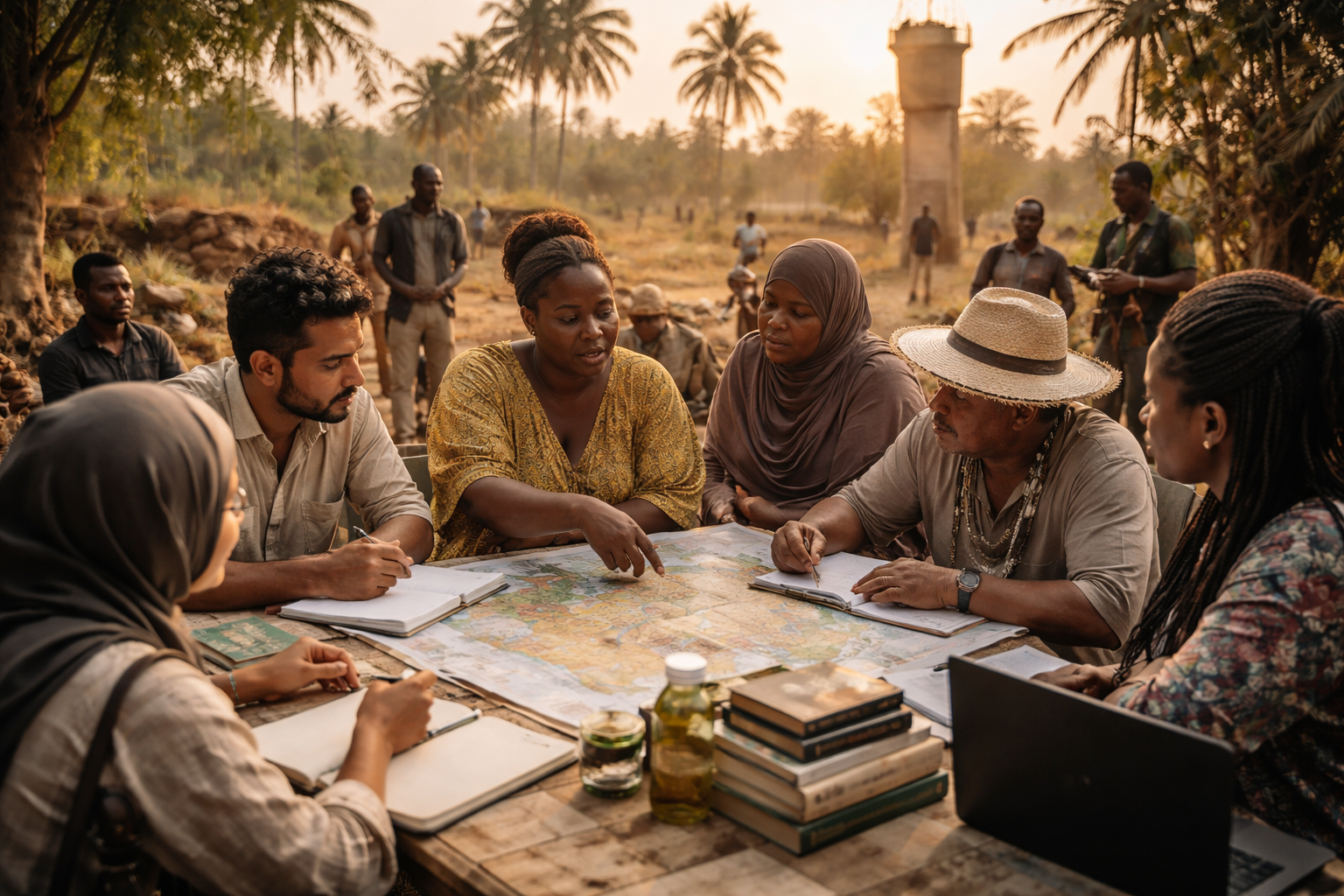
As students in Pakistan and the Global South, you are standing at a unique crossroads. You are learning theories written in London and Washington, but you are living realities in Lahore and Karachi. This guide is here to help you bridge that gap.
What Is “Decolonizing”?
Let us keep this simple. To “colonize” means to take over. For a long time, Western powers took over land, resources, and also ideas.
In security studies, this means the questions we ask are often the questions Western powers care about. They care about nuclear weapons, international terrorism, and trade routes. So, universities teach these as the most important topics.
To “decolonize” means to bring other questions back to the table. It means saying: Water security is just as important as nuclear security. Women’s safety is just as important as border safety.
It does not mean ignoring the army or the government. It means recognizing that a state can have a strong army but still be insecure if its people are hungry or fearful.
The Western Default: What You Need to Know
Most standard International Relations (IR) textbooks rely on something called “Realism.” This theory says the world is dangerous, and the only thing that matters is state power.
This theory was built during the Cold War, mostly by men in Europe and America. It worked for explaining why the US and USSR did not fight directly. But does it explain why a flood in Pakistan can displace millions? Does it explain how climate change fuels conflict in Africa?
Not really.
When you study security using only this default setting, you miss half the picture. You might understand why two countries are arguing, but you will not understand why the people living between them are suffering.
As we discussed in our mission piece, Why ‘Beyond Western Frames’ Matters in 2026, relying on one manual for a different car leads to breakdowns. The same is true for security theory.
A Toolkit: Three Questions to Ask
So, how do you start decolonizing your own thinking? You do not need to wait for a new textbook. You can start with your next assignment.
Whenever you read a security analysis—or write one—ask these three questions:
1. Who is being secured?
Is the article talking about protecting the government’s power? Or is it talking about protecting the people’s lives? Sometimes these match. Often, they do not.
2. What is the threat?
Is the threat only a foreign enemy? Or could the threat be disease, poverty, or environmental collapse? In 2026, a virus or a heatwave can kill more people than a bullet.
3. Whose voice is missing?
Look at the sources. Are all the experts men? Are they all from big cities? Are they all from powerful countries? If yes, the analysis is likely missing something crucial.
Why This Matters for Pakistan
You might wonder: This sounds philosophical. How does it help me in Pakistan?
It helps because it changes how we solve problems.
For decades, Pakistan’s security debate has been dominated by traditional views. Heavy focus on borders, military strength, and geopolitical alliances. These are vital. But look at the challenges we face today.
- Climate Security: The 2022 floods showed us that water is a security threat. A decolonized approach puts climate adaptation at the center of national security policy, not just the environment ministry.
- Human Security: When young people cannot find jobs, they become vulnerable to extremism. A decolonized approach sees economic opportunity as a security strategy, not just an economic one.
- Gender Security: When women are unsafe in public spaces, half the population cannot contribute fully to society. A decolonized approach sees gender equality as a national security priority.
By widening the definition, we do not weaken the state. We strengthen it. A state is only as secure as its most vulnerable citizen.
Moving Forward: You Are the Researcher
Decolonizing security studies is not just for professors. It is for you.
You have access to information your grandparents could not imagine. You can talk to farmers about water. You can interview shopkeepers about inflation. You can look at data that was once secret.
Do not just repeat what the textbooks say. Test them against your reality.
If a theory says states are the only important actors, but you see NGOs saving lives during a disaster, note that. If a report says a region is “unsafe” because of militants, but locals say they feel safe because of community councils, write that down.
Your perspective is not “lesser” because it is local. It is essential because it is real.
Join the Discussion
At Presser Review, we want to hear your voice. We are building a library of knowledge that reflects our realities, not just imported theories.
- Read More: Check out our third flagship piece on Climate Data and Local Knowledge.
- Write for Us: Are you a student? Send us your essays. We want to publish your critical thinking.
- Share: Discuss this with your classmates. Ask them: What does security mean to you?
The world is changing. The old maps are fading. It is time for us to draw new ones.
💡 Why This Matters
| Traditional View | Decolonized View |
|---|---|
| Focus: State Borders & Military | Focus: People & Communities |
| Threats: Foreign Armies, Terrorists | Threats: Climate, Poverty, Disease |
| Experts: Generals, Diplomats | Experts: Locals, Women, Youth |
| Goal: Protect the Government | Goal: Protect the Human Dignity |
Understanding this difference helps you analyze news and policy with a sharper, more realistic eye.