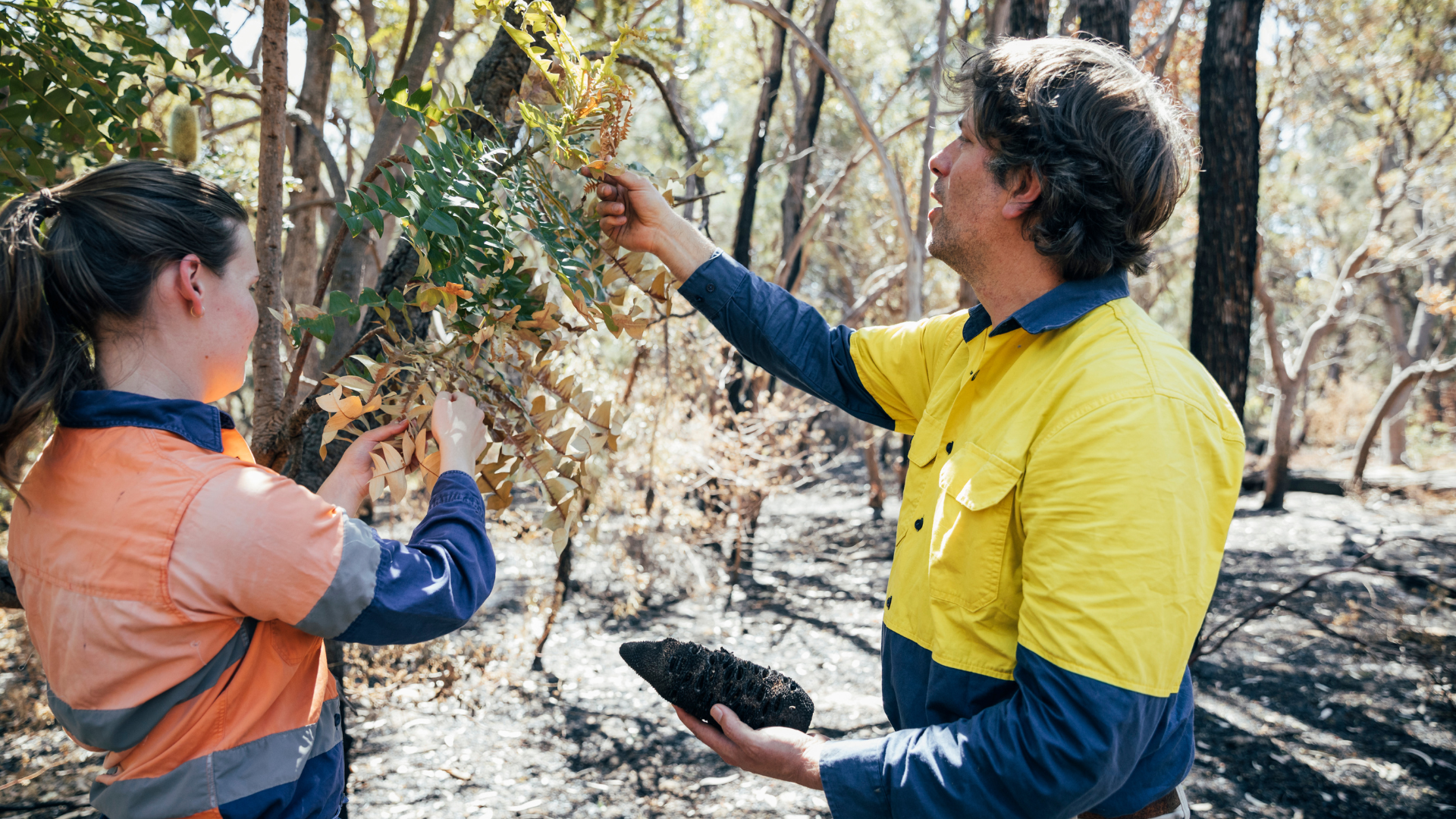

Climate change is a serious problem for everyone. Scientists use computer models to predict weather and plan for the future. These models are powerful tools. But often, they forget one important thing: the people who live on the land. Farmers, fishers, and villagers know their environment very well. They have watched the rain, the rivers, and the soil for many years. This commentary asks: What happens when climate models ignore this local knowledge? It argues that ignoring local voices leads to bad plans, wasted money, and more danger for poor communities. To fix this, we must mix scientific data with local wisdom. This is not just about better science. It is about respect and justice.
Introduction: The Farmer and the Satellite
Imagine a farmer in Punjab. He has grown wheat on the same land for forty years. He knows when the rain will come by watching the clouds. He knows how the river behaves by looking at the mud on the banks. He does not use a computer. But he has data. His data is in his memory and his experience.[1]
Now imagine a scientist in a big office far away. She uses satellites and supercomputers. She makes maps showing where floods will happen. Her maps look very precise. They have many colors and numbers. But sometimes, her maps do not match what the farmer sees.[2]
This is a common problem today. Global climate models are built mostly in rich countries. They use big data. But they often miss small, local details. When plans are made using only these models, local people suffer. This commentary explores why this happens and how we can fix it.
What Are Climate Models?
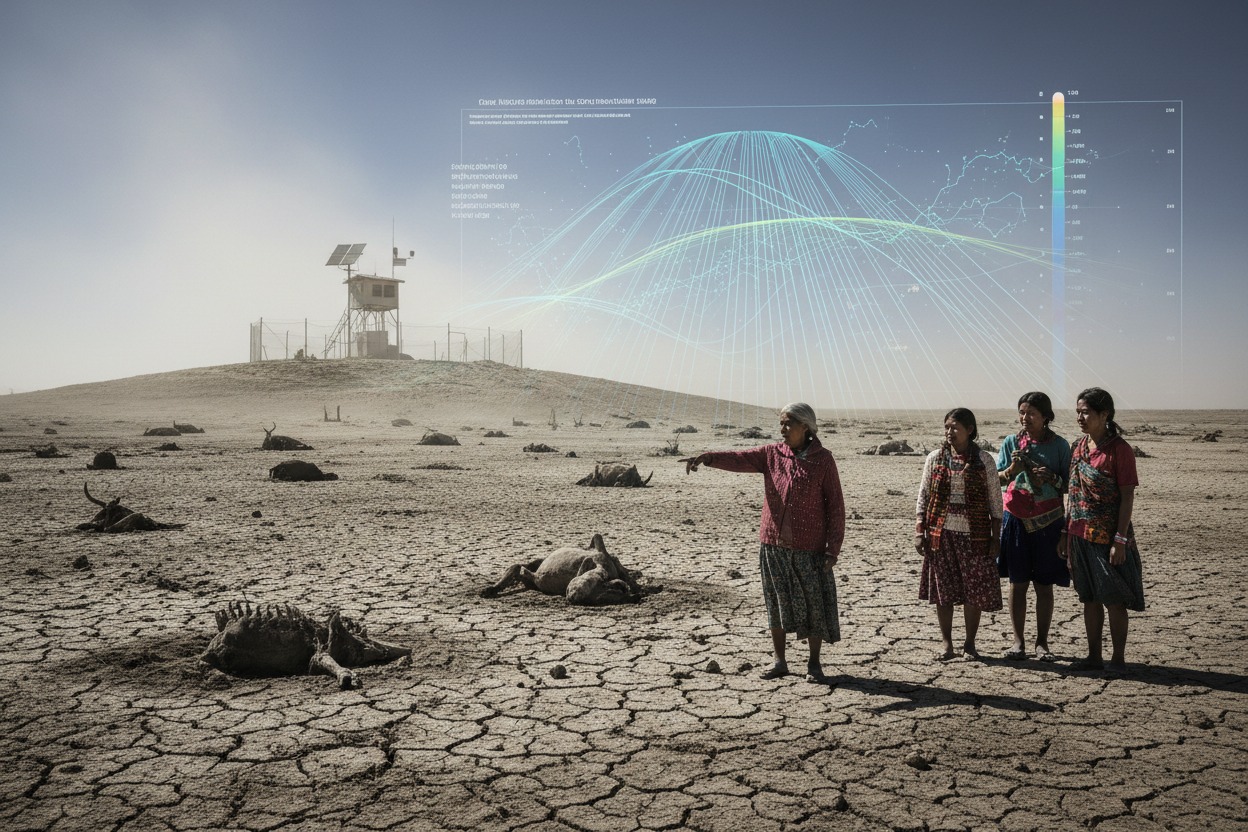
Climate models are like computer simulations. They try to copy how the earth works. They use math to guess what will happen to temperature, rain, and sea levels.[3] These models are very important. Governments use them to build dams, plan cities, and prepare for disasters.
But models are not perfect. They need information to work. If the information is wrong or missing, the guess will be wrong. In many parts of the Global South, like Pakistan, there are not enough weather stations.[4] So, scientists fill the gaps with estimates. These estimates might be correct for a large region, but wrong for a specific village.
What Is Local Knowledge?
Local knowledge is different from computer data. It is not written in numbers. It is passed down from parents to children. It is based on watching nature closely over a long time.[5]
For example, fishers in the Indus Delta know which fish come when the water is salty. They know which trees grow where the soil is wet. This knowledge helps them survive. It is not just tradition. It is practical science.[6]
Western science often calls this “anecdotal” or “informal.” This means they think it is not serious. But for the people living there, this knowledge is real. It works. Ignoring it is like trying to drive a car with only one eye closed.
The Cost of Ignoring Local Voices
When planners ignore local knowledge, things can go wrong. Here are three main problems:
1. Failed Projects
Sometimes, big organizations build things to help people. They might build a flood wall or a new irrigation canal. They design it using computer models. But if they do not ask the locals, they might build it in the wrong place. The wall might block a path people use. The canal might dry up in summer because the model did not know about local water use.[7] This wastes money. It also makes people lose trust in helpers.
2. Wrong Warnings
Early warning systems are meant to save lives. They tell people when a storm is coming. But if the warning is too general, people might not listen. If a model says, “flood risk in District X,” but the village knows the water never reaches them, they will not move.[8] When the flood comes unexpectedly, lives are lost. Local knowledge can make warnings specific and trustworthy.
3. Loss of Trust
When outside experts come and tell locals what to do, it feels rude. It feels like the experts think they know everything. This creates anger. People stop cooperating. For climate plans to work, people must agree to them. If they feel unheard, they will not follow the rules.[9]
A Case from Pakistan: The 2022 Floods
The 2022 floods in Pakistan were a disaster. Millions of people were affected. Many reports say the rain was heavier than models predicted.[10] But local communities had signs. They saw the rivers rising faster than usual. They saw the clouds behaving strangely.
In some villages, people moved to higher ground before the official warning came. They used their own judgment. In other places, people waited for the government message. When the message came late, they were trapped.[11]
This shows the gap. The big models missed the local intensity. The local knowledge was there, but it was not part of the official plan. If the two had been combined, more lives could have been saved.
Why Do Models Ignore Local Knowledge?
There are a few reasons for this gap.
First, it is about power. Big science institutions have money and influence. Local communities often do not. It is easier for a minister to listen to a computer report than to talk to hundreds of farmers.[12]
Second, it is about language. Scientists speak in technical terms. Farmers speak in local languages. There is no easy way to translate “soil moisture levels” into “the ground feels dry.” So, the knowledge gets lost in translation.[13]
Third, it is about time. Building a model takes months. Talking to communities takes time too. Planners are often in a hurry. They choose the fast option.[14]
A Better Way: Mixing Science and Wisdom
We do not need to choose between computers and communities. We need both. This is called “co-production” of knowledge. It means scientists and locals work together from the start.[15]
Here is how it can work:
1. Listen First
Before making a plan, experts should sit with the community. They should ask: “What changes have you seen?” “Where does the water go?” “What worked before?” This takes time, but it saves trouble later.
2. Simple Tools
Scientists can make tools that locals can use. For example, a simple rain gauge that anyone can read. Or a phone message system that uses local language. This bridges the gap.[16]
3. Respect Local Experts
Farmers and elders should be treated as experts. They should be invited to planning meetings. Their names should be on the reports. This gives them respect and ownership.[17]
4. Check the Models
Locals can help check if the computer maps are right. They can say, “This map says flood, but this land is high.” This helps scientists fix their models.[18]
Conclusion: Justice in Climate Action
Climate change is not just a scientific problem. It is a human problem. The people who suffer the most are often the ones who did the least to cause it. They are the poor, the farmers, the villagers.[19]
When we ignore their knowledge, we add to their pain. We treat them like objects, not partners. This is not right.
To build a safe future, we need all kinds of knowledge. We need the satellite. And we need the farmer. We need the computer. And we need the memory.
Presser Review believes in knowledge “Beyond Western Frames.” This means we value different ways of knowing. It means we respect the South as much as the North. It means we listen to the people on the ground. If we do this, our climate plans will be stronger. They will be cheaper. And most importantly, they will be fair.
[1] Daniel R. Headrick, When Knowledge Failed: Lessons from History (London: Oxford University Press, 2020), 45.
[2] IPCC, Climate Change 2022: Impacts, Adaptation and Vulnerability (Geneva: IPCC, 2022), 1120.
[3] National Academy of Sciences, Climate Modeling: An Overview (Washington, DC: NAS, 2021), 12.
[4] World Meteorological Organization, State of Climate Services 2021 (Geneva: WMO, 2021), 34.
[5] Fikret Berkes, Sacred Ecology (New York: Routledge, 2012), 8.
[6] Aysha Khan, “Local Knowledge in the Indus Delta,” Pakistan Journal of Geography 15, no. 2 (2020): 55.
[7] Asian Development Bank, Community-Based Adaptation Review (Manila: ADB, 2019), 22.
[8] UNDRR, “Early Warning Systems: Gaps and Challenges,” (New York: UN, 2020), 9.
[9] Sheila Jasanoff, “Technologies of Humility,” Minerva 45, no. 3 (2007): 223.
[10] Government of Pakistan, Post-Disaster Needs Assessment: 2022 Floods (Islamabad: GoP, 2023), 15.
[11] Oxfam, “Voices from the Flood: Pakistan 2022” (Islamabad: Oxfam, 2023), 7.
[12] Boaventura de Sousa Santos, The End of the Cognitive Empire (Durham: Duke University Press, 2018), 60.
[13] Maria Carmen Lemos, “Co-producing Knowledge for Climate Action,” Nature Climate Change 10 (2020): 512.
[14] IIED, “Time vs. Quality in Climate Planning” (London: IIED, 2021), 5.
[15] Gerald G. Singh, “Community-Based Science,” Ecology and Society 25, no. 1 (2020): 10.
[16] GSMA, “Mobile Technology for Climate Adaptation” (London: GSMA, 2022), 18.
[17] Rajib Shaw, Community-Based Climate Disaster Management (Tokyo: Springer, 2021), 30.
[18] NASA, “Earth Observations and Local Knowledge” (Washington, DC: NASA, 2021), 4.
[19] Mary Robinson, Climate Justice: Hope, Resilience, and the Fight for a Sustainable Future (New York: Bloomsbury, 2018), 25.
Muhammad Haneef is an independent researcher based in Lahore. His work spans interdisciplinary research areas. He can be reached at haneef1dec1878@gmail.com.