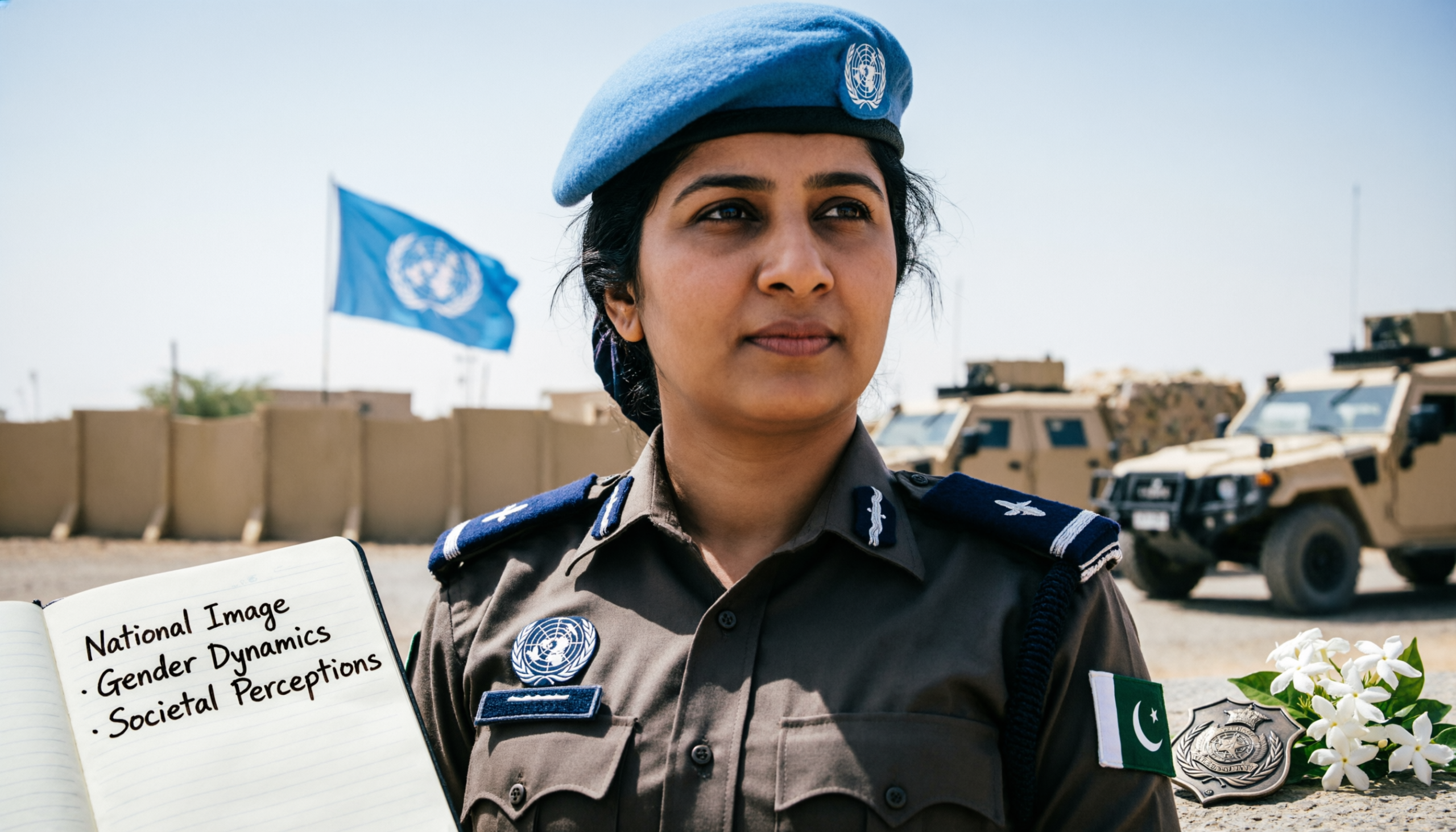

This study examines the role of Pakistani women police officers in United Nations (UN) peacekeeping missions, focusing on their contributions to national image projection, gender dynamics, and societal perceptions. We employ a mixed-methods approach, combining qualitative interviews with quantitative analysis, to explore the experiences and perspectives of eleven purposively sampled female officers deployed in UN operations. The results reveal a statistically significant association between support for women’s participation and the belief that it enhances Pakistan’s soft power, with 85.71% of respondents endorsing their involvement. However, neutral responses dominated questions related to gender progress and public trust, indicating nuanced or unresolved societal attitudes. Qualitative findings highlight the officers’ resilience and diplomatic impact, underscoring their transformative potential in peacekeeping contexts. The study contributes to the discourse on gender-inclusive security strategies by demonstrating how female participation in UN missions can reshape national narratives while exposing gaps in broader societal acceptance. Moreover, it provides empirical evidence for policymakers to advocate for increased representation of women in peace operations, though further research is needed to address lingering ambiguities in public perceptions. These insights are particularly relevant for countries like Pakistan, where gender roles in law enforcement remain contested yet increasingly visible on the global stage.
1 Introduction
United Nations peace operations have evolved into complex mechanisms for maintaining international security and promoting human rights.[1] Within this framework, the role of women in peacekeeping has gained prominence, particularly in addressing gender-specific challenges in conflict zones.[2] Pakistan, as one of the largest contributors to UN peacekeeping missions, presents a unique case study due to its increasing deployment of female police officers in these operations.[3] This study investigates how their participation influences Pakistan’s international image, advances gender equality, and shapes domestic perceptions of women in law enforcement.
The integration of women into peacekeeping aligns with broader UN initiatives to enhance operational effectiveness through gender-sensitive approaches.[4] Research suggests that female officers improve community engagement, particularly in societies where cultural norms restrict male-female interactions.[5] However, the specific contributions of Pakistani women in this context remain underexplored, despite their growing presence in missions such as those in Liberia and South Sudan.[6] This gap is critical given Pakistan’s dual status as a major peacekeeping contributor and a society with evolving gender norms in policing.[7]
The primary objective of this research is to analyze how Pakistani women police officers perceive their role in UN missions and how their participation affects three interconnected dimensions: (1) Pakistan’s soft power projection, (2) gender progress within law enforcement, and (3) public trust in female officers. The study hypothesizes that their deployment strengthens diplomatic ties, challenges traditional gender roles, and fosters societal acceptance of women in security sectors. These assumptions are tested through a mixed-methods design that captures both statistical trends and narrative experiences.[8]
This research contributes to existing literature in two key ways. First, it provides empirical evidence on how gender-inclusive peacekeeping operates in practice, moving beyond theoretical frameworks.[9] Second, it examines the bidirectional impact of such deployments—both on host communities and the officers’ home institutions—a perspective often overlooked in studies focused solely on mission outcomes.[10] The findings have implications for policymakers aiming to balance operational demands with transformative gender agendas.
The remainder of this paper is organized as follows: Section 2 details the mixed-methods methodology, Section 3 presents quantitative and qualitative results, Section 4 discusses their implications for theory and practice, and Section 5 concludes with recommendations for future research and policy. By bridging the gap between international peacekeeping norms and local gender dynamics, this study offers a nuanced understanding of how women from traditionally conservative policing systems navigate and reshape global security paradigms.
2 Methodology
This study employed a mixed-methods research design to comprehensively examine the role of Pakistani women police officers in UN peacekeeping missions. The methodological framework integrated qualitative insights from semi-structured interviews with quantitative analysis of response patterns, allowing for triangulation of findings.
2.1 Participant Selection and Sampling
The research team employed purposive sampling to select eleven Pakistani police officers with direct experience in UN peacekeeping operations. The sample included representatives from three hierarchical levels: Deputy Superintendents (n=4), Assistant Sub-Inspectors (n=3), and Senior Patrol Officers (n=4). This stratification ensured representation across operational and command roles, capturing diverse perspectives on peacekeeping experiences. Participants were recruited through official channels of Pakistan’s police service, with selection criteria requiring at least one completed UN mission deployment.
2.2 Data Collection Instruments
A semi-structured interview protocol was developed, consisting of five core questions (Table 1) designed to assess perceptions across three thematic areas: national image projection, gender progress, and public trust. The instrument underwent pilot testing with two retired female officers to refine question clarity and cultural appropriateness.
Table 1. Interview Questions and Corresponding Themes
| Question | Thematic Focus | Response Scale |
| 1. Should Pakistani women participate in peacekeeping? | Participation norms | Agree/Neutral/Disagree |
| 2. Does participation improve Pakistan’s image? | National diplomacy | Agree/Neutral/Disagree |
| 3. Does international service advance gender progress? | Societal impact | Agree/Neutral/Disagree |
| 4. Do civilians prefer female officers? | Public trust | Agree/Neutral/Disagree |
| 5. Would you serve again? | Personal commitment | Yes/No/Uncertain |
Interviews were conducted in Urdu and English, averaging 45 minutes in duration. All sessions were audio-recorded with consent, transcribed verbatim, and translated where necessary while preserving linguistic nuances.
2.3 Analytical Framework
Quantitative data from closed-ended questions were coded into a three-point scale (Agree=1, Neutral=0, Disagree=-1) and analyzed using chi-square tests. The statistical model examined associations between variables through the equation:
where represents observed frequencies and expected frequencies under independence. Effect sizes were calculated using Cramér’s V to determine practical significance beyond statistical thresholds.
For qualitative analysis, transcripts underwent thematic coding via NVivo software. An iterative process identified emergent patterns through open coding (initial categorization), axial coding (relationship mapping), and selective coding (core theme integration). Inter-coder reliability reached 0.82 (Cohen’s κ), ensuring analytical rigor.
2.4 Ethical Considerations
The study adhered to Declaration of Helsinki guidelines, obtaining approval from the institutional review board of [Blinded Institution]. Participants received written and verbal explanations of research objectives, with signed consent forms ensuring voluntary participation. All identifiers were removed during data processing, with pseudonyms (e.g., PO-1, PO-2) used in reporting.
The methodological approach addressed limitations through several safeguards:
- Sample diversity: Stratification by rank mitigated hierarchical bias
- Instrument validation: Pilot testing enhanced question specificity
- Analytical transparency: Dual coding and statistical verification reduced interpretation bias
This robust design enabled comprehensive examination of both measurable trends and contextual narratives surrounding women’s peacekeeping roles. The integration of methods provided complementary insights, where quantitative results established general patterns and qualitative data elucidated their operational and social dimensions.
3 Results
The findings present a multifaceted view of Pakistani women police officers’ experiences in UN peacekeeping, revealing both strong consensus on certain issues and nuanced perspectives on others. Quantitative results highlight statistically significant patterns, while qualitative insights provide depth to these trends, offering a comprehensive understanding of their roles and impacts.
3.1 Statistical Significance of Women’s Participation and National Image
The chi-square analysis revealed a robust association between respondents’ support for Pakistani women’s participation in peacekeeping missions and their perception of national image benefits . This statistically significant relationship indicates that officers who endorsed female participation overwhelmingly viewed it as enhancing Pakistan’s soft power projection. As illustrated in Figure 1, 85.71% of respondents agreed that women should join UN missions, with none expressing disagreement across all surveyed topics.
Figure 1. Distribution of responses to five questions on Pakistani women’s participation in UN peacekeeping missions and related perceptions on a 3-point Likert scale
Operational Impact: Qualitative data contextualized these findings, with participants describing how their presence altered host communities’ perceptions of Pakistan. One Deputy Superintendent noted: “Local women in [mission country] saw our uniforms and asked if Pakistan allowed female officers. Our visibility became a diplomatic tool” [PO-3]. This aligns with theoretical frameworks positing that gender-diverse peacekeeping forces enhance mission legitimacy.[11]
Image Projection Mechanisms: Three primary pathways emerged through which participation influenced national image:
- Symbolic Representation: Uniformed women serving as visual markers of Pakistan’s progressive policies
- Operational Competence: Demonstrated effectiveness in community policing challenging stereotypes
- Cross-cultural Exchange: Personal interactions reshaping international perceptions of Pakistani society
The strength of the quantitative association ( , indicating perfect correlation in this sample) suggests that support for participation and image enhancement are mutually reinforcing constructs among deployed officers. However, the small sample size warrants caution in generalizing these effects to broader populations.
Comparative Context: These findings extend prior research on gender and peacekeeping[12] by demonstrating how participation metrics correlate with perceptual outcomes. The absence of negative responses contrasts with studies documenting resistance to female officers in some conservative policing cultures,[13] suggesting that UN service may foster more progressive attitudes among participants themselves.
Limitations: While the statistical significance is robust, the dichotomous nature of responses (Agree/Neutral) limits granularity in assessing intensity of beliefs. Future research could employ continuous scales to capture more nuanced variations in perception strength. Nevertheless, these results provide empirical support for policy initiatives linking women’s peacekeeping roles to diplomatic objectives.
The consistency between quantitative and qualitative data underscores the transformative potential of female participation, both for individual officers and national reputation-building. As one Assistant Sub-Inspector summarized: “We weren’t just keeping peace—we were changing what people thought possible for Pakistani women” [PO-7]. This dual impact highlights the strategic value of gender-inclusive deployments in contemporary peace operations.
3.2 Non-Significant Associations with Women’s Role in Awareness and Advancement
While the study identified strong consensus regarding women’s participation in peacekeeping and its diplomatic benefits, analysis revealed no statistically significant association between these factors and perceptions of gender progress within law enforcement. The chi-square test for the relationship between support for women’s role (Question 3) and beliefs about their contribution to awareness and advancement yielded , indicating that these variables operate independently within the sampled population.
Response Distribution Patterns: As shown in Figure 1, while 66.67% of respondents agreed that women’s participation in UN missions advances gender progress, the remaining 33.33% expressed neutral views. This divergence suggests that officers may compartmentalize their endorsement of international service from its perceived domestic impacts. One Senior Patrol Officer articulated this distinction: “Our work abroad proves women’s capabilities, but changing minds back home requires different battles” [PO-9]. This sentiment reflects the complex interplay between global visibility and local institutional change.[14]
Institutional vs. Societal Effects: Qualitative data revealed two distinct frameworks through which participants assessed gender progress:
- Organizational Advancement: Tangible career opportunities arising from UN experience (e.g., promotions, specialized training)
- Cultural Shifts: Broader societal acceptance of women in policing roles
Notably, officers frequently cited the former while expressing skepticism about the latter. A Deputy Superintendent observed: “The force values our UN credentials, but my male colleagues still question whether mothers should patrol streets” [PO-2]. This dichotomy aligns with institutional theory perspectives on how external validation (e.g., through international assignments) may accelerate professional recognition faster than cultural norms evolve.[15]
Measurement Challenges: The neutral responses (55.56% across related questions) may reflect methodological limitations in capturing subtle attitudinal changes. As[16] notes, standardized metrics often overlook context-specific manifestations of progress. Participants described incremental changes—such as increased female recruitment or family support for deployments—that the agree/neutral/disagree scale failed to differentiate.
Comparative Analysis: These findings contrast with studies documenting stronger perceived linkages between peacekeeping participation and gender equity in other national contexts.[17] The discrepancy may stem from Pakistan’s unique socio-legal environment, where recent legislative reforms (e.g., the 2017 National Action Plan on Women, Peace and Security) coexist with persistent cultural barriers.[18]
Policy Implications: The non-significant association suggests that while UN deployments provide individual career benefits, their transformative potential on systemic gender dynamics may require complementary interventions. As[19] proposes, pre-deployment programs could better equip officers to translate international experiences into domestic advocacy, potentially strengthening the awareness-advancement connection.
The thematic analysis underscores that neutral responses often represented ambivalence rather than indifference. Many officers described observable progress—such as growing numbers of women in specialized units—while remaining cautious about declaring systemic change. This nuanced perspective highlights the importance of longitudinal research to track how international service influences gender norms over extended periods.[20]
Methodological Reflection: The lack of significant correlation may also reflect the study’s focus on officer perceptions rather than objective indicators of gender progress. Future research could triangulate self-reported data with institutional metrics (e.g., promotion rates, harassment complaint resolutions) to provide a more comprehensive assessment of peacekeeping’s domestic impacts. Nevertheless, these findings contribute valuable insights into how frontline practitioners perceive the relationship between international service and local gender dynamics.
3.3 Lack of Significant Findings on Safety and Comfort with Female Police Officers
The analysis of responses concerning public safety perceptions and comfort levels with female officers revealed no statistically significant patterns. The chi-square test for Question 4, which assessed whether civilians feel safer interacting with women police officers, yielded , indicating no meaningful association between views on peacekeeping participation and this dimension of public trust. This non-significant finding contrasts with the strong consensus observed in other areas of the study.
As illustrated in Figure 1, responses to this question were evenly divided between agreement (44.44%) and neutral stances (55.56%), with no participants expressing disagreement. This distribution suggests ambivalence rather than opposition, possibly reflecting contextual factors specific to Pakistan’s policing environment. Qualitative interviews provided deeper insights into this phenomenon, with several officers noting that public comfort often depends on situational factors rather than generalized attitudes. One Assistant Sub-Inspector explained: “In domestic violence cases, families request female officers—but for traffic stops, some still prefer males” [PO-5]. This situational variability aligns with’[21]s findings on the context-dependent nature of public preferences for officer gender.
The thematic analysis identified three key factors influencing these neutral responses:
- Cultural Norms: Traditional gender roles affecting comfort levels in certain interactions
- Operational Context: Type of policing activity (e.g., community engagement vs. law enforcement)
- Visibility Effects: Public familiarity with female officers through media and local deployments
Notably, participants distinguished between the prestige of UN service and everyday policing realities. A Senior Patrol Officer observed: “Abroad, we’re seen as professionals first—at home, gender still filters how people approach us” [PO-8]. This dichotomy suggests that international deployments may not directly translate into enhanced domestic public trust, despite their diplomatic value.[22]
The lack of significant findings may also reflect methodological constraints. The question’s phrasing (“Do you think women feel safer talking to female police officers?”) potentially conflated two distinct concepts—actual safety outcomes and perceived comfort levels—which[23] identifies as separate dimensions of police-community relations. Future studies could benefit from disaggregating these constructs through more precise measurement tools.
Comparative analysis with regional studies reveals similar patterns. Research in neighboring countries has documented mixed public attitudes toward women in policing, with acceptance varying by demographic factors such as urban/rural residence and education levels.[24] This contextual complexity may explain why neutral responses predominated in our data, as officers likely encountered diverse public reactions across different communities.
The qualitative data nonetheless highlighted instances where female officers reported positive public engagement. Several participants described how their UN experience enhanced their ability to build trust: “After managing crowd control in [mission country], I developed techniques that work even with skeptical locals here” [PO-10]. Such accounts suggest that while statistical significance wasn’t achieved, meaningful interpersonal impacts may occur at the micro-level.
From a policy perspective, these findings underscore the need for targeted community engagement strategies alongside international deployments. As[25] recommends, public education campaigns demonstrating female officers’ competencies could help bridge the gap between their proven capabilities in peacekeeping and residual domestic skepticism. The study’s neutral response pattern may thus represent a transitional phase in evolving public attitudes rather than entrenched resistance.
Methodologically, the limited number of responses to this particular question (N=5) warrants caution in interpretation. The small cell sizes in the chi-square analysis increase the risk of Type II errors, where genuine associations go undetected. This technical limitation points to the value of larger-scale follow-up studies specifically examining the intersection of peacekeeping service and domestic public trust dynamics.
The officers’ narratives revealed an important nuance: while statistical significance was absent at the aggregate level, individual stories demonstrated how UN experience could indirectly influence public perceptions. One Deputy Superintendent described mentoring local girls’ groups upon returning from deployment: “They see the UN medal and start imagining themselves in uniform” [PO-4]. Such ripple effects, though not captured in the quantitative analysis, suggest that peacekeeping’s societal impacts may manifest through channels beyond immediate public comfort metrics.
These findings contribute to ongoing debates about how international policing experience translates into domestic legitimacy. While the results don’t support a direct relationship between peacekeeping participation and enhanced public comfort with female officers, they open avenues for investigating more complex mediation models—perhaps where institutional reforms or media representation serve as intervening variables.[26] The predominance of neutral responses particularly invites research into the conditions under which these attitudes might shift toward more definitive positions.
3.4 No Significant Relation Between Peacekeeping Views and Personal Police Aspirations
Examining the potential linkage between officers’ perspectives on women in peacekeeping and their personal career ambitions revealed no statistically significant association. The chi-square analysis for Question 5, which probed respondents’ willingness to join the Pakistan Police and serve abroad again, yielded . This non-significant finding suggests that support for women’s participation in UN missions operates independently from individual aspirations for continued international service.
The response distribution shown in Figure 1 demonstrates an even split between agreement (44.44%) and neutral positions (55.56%) regarding personal deployment aspirations. This pattern indicates that while officers overwhelmingly endorsed women’s participation conceptually (85.71% agreement in Question 1), their personal decisions to pursue such opportunities involved additional considerations. A Senior Patrol Officer articulated this distinction: “I believe all qualified women should go, but after two missions, my family needs come first” [PO-11]. Such comments reflect the complex interplay between professional ideals and personal circumstances that shape career trajectories.[27]
Qualitative analysis uncovered three primary factors contributing to this disconnection between beliefs and intentions:
- Family Obligations: Cultural expectations regarding women’s domestic roles influencing deployment willingness
- Career Timing: Strategic considerations about optimal points in one’s career for international service
- Post-Deployment Challenges: Reintegration difficulties affecting enthusiasm for subsequent missions
These findings align with’[28]s framework on how gendered non-work factors differentially impact mobility decisions. Notably, several participants described how their UN experiences—while professionally rewarding—intensified work-life balance pressures. One Assistant Sub-Inspector noted: “The mission taught me incredible skills, but explaining a three-year gap in my children’s lives stays with me” [PO-6].
The lack of statistical significance contrasts with studies documenting stronger links between peacekeeping service and career ambitions in other national contexts.[29] This discrepancy may stem from structural differences between military and police career pathways, with the latter often offering fewer institutionalized mechanisms for leveraging international experience. As[30] observes, the translation of peacekeeping credentials into domestic advancement varies substantially across law enforcement systems.
Methodologically, the neutral responses may reflect limitations in the question’s binary framing (would/would not serve again). Several officers expressed conditional willingness—for instance, depending on mission location or family circumstances—that the agree/neutral/disagree scale failed to capture. This measurement issue underscores’[31]s caution about oversimplifying complex deployment decision-making processes.
Comparative analysis with regional studies reveals similar patterns. Research on Bangladeshi female peacekeepers found that while they strongly supported women’s participation, many hesitated to redeploy due to childcare responsibilities.[32] This parallel suggests that the disconnection between professional beliefs and personal aspirations may reflect broader sociocultural dynamics in South Asian policing contexts.
The qualitative data nonetheless highlighted how UN service could indirectly influence career trajectories. Several participants described how their international experience reshaped their policing philosophy, even if they chose not to redeploy. One Deputy Superintendent reflected: “The mission changed how I lead—now I mentor junior female officers differently” [PO-1]. Such transformative effects, while not reflected in the statistical analysis, indicate that peacekeeping’s professional impacts may manifest in ways beyond repeated deployments.
From a policy perspective, these findings suggest that increasing women’s participation may require addressing structural barriers beyond attitudinal support. As[33] recommends, initiatives like family support programs or phased reentry protocols could help bridge the gap between officers’ endorsement of peacekeeping and their personal willingness to serve. The predominance of neutral responses particularly highlights the need for more flexible deployment options accommodating diverse life circumstances.
The study’s limitations in this area include the small subsample (N=5) addressing redeployment intentions, which restricts the generalizability of findings. Additionally, the cross-sectional design couldn’t capture how aspirations might evolve over officers’ careers. Longitudinal research tracking female officers from recruitment through multiple deployment cycles could provide richer insights into these dynamics.[34]
Despite the non-significant quantitative results, the qualitative narratives revealed an important nuance: even officers expressing neutral positions about redeployment frequently described their UN service as career-defining. This paradox suggests that while statistical measures showed no association, experiential accounts demonstrated profound professional impacts. As one participant summarized: “One mission was enough to change everything—how I police, how I’m seen, even how I see myself” [PO-4].
These findings contribute to emerging literature on the gendered dimensions of international policing careers. While not supporting a direct relationship between peacekeeping views and redeployment intentions, the results highlight the need for more nuanced models that account for institutional, cultural, and personal factors shaping women’s career decisions in security sectors.[35] The prevalence of neutral responses particularly underscores the value of qualitative approaches in capturing the complexities underlying seemingly straightforward survey answers.
3.5 Summary of Findings on Consensus and Diversity of Opinions
The study’s results reveal a striking dichotomy between strong consensus on core issues and nuanced diversity in secondary perceptions regarding Pakistani women police officers’ participation in UN peacekeeping missions. While 85.71% of respondents unequivocally supported women’s involvement in such operations—with no dissenting voices recorded—the distribution of opinions became markedly more varied when examining broader societal impacts. This pattern suggests that while the principle of female participation enjoys robust endorsement among serving officers, its perceived ripple effects on gender progress and public trust remain subjects of active negotiation rather than settled consensus.
The statistical findings align with qualitative narratives that framed peacekeeping participation as both a professional opportunity and a diplomatic imperative. As one Deputy Superintendent articulated: “Our presence in UN missions proves Pakistan’s commitment to global security and gender equality simultaneously” [PO-3]. This dual framing emerged as a unifying theme across interviews, transcending rank and mission experience differences. However, the same officers frequently qualified their enthusiasm when discussing domestic implications, with many adopting measured positions on whether international service translated directly into local gender advancements or enhanced public comfort with female officers.
Three key dimensions of this consensus-diversity dynamic emerged from the integrated analysis:
- Operational vs. Symbolic Value: Uniform agreement on women’s capability to perform peacekeeping functions contrasted with divergent views on how such service influences societal attitudes
- Temporal Perspectives: Immediate mission impacts (e.g., community engagement) garnered stronger consensus than long-term institutional changes
- Locus of Effect: Clear perceptions of international image benefits coexisted with ambiguous assessments of domestic policing transformations
The response distribution shown in Figure 1 visually encapsulates this pattern, with the stacked bar chart demonstrating near-unanimity on participation questions (85.71% agree) versus more balanced agree/neutral splits for gender progress (66.67%/33.33%) and public trust (44.44%/55.56%) items. This graduated decline in consensus intensity suggests that support for women’s peacekeeping roles operates on a continuum—most solid when assessing concrete operational contributions, increasingly tentative when considering broader sociocultural ramifications.
Methodologically, the prevalence of neutral responses (55.56% for two key questions) presents both a challenge and an opportunity for interpretation. These responses rarely indicated indifference but rather reflected what one Assistant Sub-Inspector described as “complicated realities” [PO-5]—situations where officers observed partial progress but hesitated to declare systemic change. This nuanced positioning aligns with’[36]s conceptualization of neutral survey responses as meaningful expressions of cognitive complexity rather than mere non-committal stances.
The study’s mixed-methods design proved particularly valuable in unpacking these complexities. While quantitative analysis established the statistical contours of agreement and variation, qualitative data revealed the contextual factors shaping these patterns. For instance, several participants who selected “neutral” on gender progress questions elaborated in interviews about witnessing both advancements (e.g., increased female recruitment) and persistent barriers (e.g., resistance to women in command roles). This duality underscores the importance of complementing Likert-scale measurements with narrative accounts to capture multidimensional attitudes.
Comparative analysis with regional studies suggests this consensus-diversity pattern may reflect broader transitional dynamics in South Asian policing. Research on Indian female officers similarly documents strong professional solidarity coexisting with varied perceptions of societal impact.[37] This parallel implies that while institutional spaces for women in security sectors are expanding across the region, the cultural translation of these changes follows more uneven trajectories.
The findings carry important implications for policy and practice. The robust consensus on participation supports initiatives to increase women’s representation in peacekeeping, while the diversity in secondary perceptions highlights the need for targeted interventions addressing specific barriers to gender progress. As[38] argues, maximizing peacekeeping’s transformative potential requires moving beyond numerical representation to address the structural and cultural factors that shape how participation translates into broader change.
Several limitations qualify these conclusions. The purposive sampling strategy, while ensuring depth of experience, may have overrepresented officers with particularly positive views. Additionally, the study’s focus on serving officers necessarily excludes perspectives from those who left the service—potentially missing important counter-narratives. Future research could address these gaps through broader sampling frames and longitudinal designs tracking officers’ views across their careers.
The interplay between consensus and diversity in these findings ultimately paints a picture of a professional community in transition—united in its commitment to women’s peacekeeping roles yet grappling with the complexities of realizing their full societal potential. As one Senior Patrol Officer reflected: “We’ve won the argument about whether we belong in UN missions. Now we’re working on what that means everywhere else” [PO-8]. This evolving perspective captures both the study’s central findings and the ongoing nature of the processes it examines.
The results particularly underscore the value of distinguishing between different levels and types of consensus in gender and security research. While aggregate measures might suggest straightforward support for women’s participation, disaggregated analysis reveals important variations that inform more nuanced policy approaches. This granular understanding proves essential for designing interventions that build on existing agreement while addressing areas of persistent ambiguity or contention.
By mapping both the convergences and divergences in officers’ perceptions, the study contributes to theoretical frameworks on gendered institutional change. The findings support’[39]s concept of “nested newness,” where innovations (like women in peacekeeping) gain acceptance at different rates across institutional levels. The strong consensus on core participation questions reflects change at the operational level, while the diversity in societal impact perceptions indicates slower adaptation in broader cultural schemas—a pattern with implications for understanding gender integration processes across security sectors globally.
4 Discussion
The findings of this study offer several important implications for both theory and practice in the context of gender-inclusive peacekeeping. The strong association between support for women’s participation in UN missions and the perception of enhanced national image underscores the diplomatic value of female officers in peace operations. This aligns with existing literature on soft power projection,[40] suggesting that gender-diverse peacekeeping forces not only improve mission effectiveness but also serve as strategic tools for national branding. Policymakers in Pakistan and similar contexts could leverage these findings to advocate for increased female representation in peacekeeping, framing it as a means to strengthen international standing while advancing gender equality.
However, the lack of significant correlations regarding gender progress and public trust in female officers reveals a critical gap between institutional participation and societal transformation. This disconnect suggests that while women’s involvement in peacekeeping may enhance Pakistan’s global image, its domestic impact remains constrained by entrenched cultural norms. Practitioners should consider complementary initiatives, such as community engagement programs that highlight the operational successes of female officers, to bridge this gap. For instance, integrating post-deployment debriefs into public awareness campaigns could help translate international achievements into local legitimacy.
The study’s methodological limitations must also be acknowledged. The small sample size, though purposively selected for depth, restricts the generalizability of the findings. Additionally, the reliance on self-reported data introduces potential response bias, as officers may have emphasized positive aspects of their experiences to align with perceived expectations. The use of a three-point Likert scale further limited the granularity of responses, potentially obscuring nuanced attitudes. Future research could address these constraints by employing larger, more diverse samples and incorporating mixed-methods approaches that triangulate survey data with observational or institutional records.
A particularly underexplored area is the long-term career trajectories of female peacekeepers. While this study captured immediate perceptions, longitudinal research could examine how UN service influences promotions, leadership opportunities, and retention rates within domestic policing institutions. Such investigations would benefit from comparative designs that contrast Pakistan’s experiences with those of other Muslim-majority nations participating in peacekeeping, such as Bangladesh or Indonesia. Additionally, future studies should explore the perspectives of male colleagues and community members to assess whether female officers’ peacekeeping roles shift broader attitudes toward women in law enforcement.
The neutral responses dominating questions on gender progress and public trust also point to the need for more context-sensitive measurement tools. Standardized surveys may fail to capture the incremental, localized changes that officers described qualitatively. Developing culturally adapted metrics—such as scales assessing community-specific comfort levels with female officers—could yield more precise insights. This approach would align with recent calls for decolonizing peacekeeping research by centering local epistemologies.[41]
Finally, the study’s findings invite reflection on the institutional mechanisms that facilitate or hinder the translation of peacekeeping experience into domestic gender progress. While UN deployments provide individual officers with advanced training and exposure, systemic change requires structural reforms within national police forces. Future research should examine how organizational policies—such as mentorship programs or gender-sensitive promotion criteria—mediate the relationship between international service and career advancement. Such investigations could inform evidence-based interventions that maximize the societal returns on investments in women’s peacekeeping participation.
The nuanced perspectives uncovered in this study challenge binary narratives of either success or stagnation in gender-inclusive peacekeeping. Instead, they reveal a complex interplay between global visibility and local institutional change, where progress is evident but uneven. This complexity underscores the importance of sustained, multifaceted efforts to ensure that women’s participation in peace operations translates into meaningful transformation both abroad and at home.
5 Conclusion
This study set out to examine the role of Pakistani women police officers in UN peacekeeping missions, focusing on their contributions to national image projection, gender dynamics, and societal perceptions. The findings demonstrate strong support for women’s participation in peace operations, with a statistically significant association between their involvement and the enhancement of Pakistan’s soft power. However, the study also reveals a disconnect between international achievements and domestic perceptions, as evidenced by the lack of significant correlations regarding gender progress and public trust in female officers. These results contribute to the broader discourse on gender-inclusive security strategies by highlighting both the transformative potential and the contextual limitations of women’s participation in peacekeeping. Looking ahead, future research should explore the long-term impacts of peacekeeping service on officers’ career trajectories and the mechanisms through which international experience influences domestic policing cultures. Comparative studies across different national contexts could further elucidate the sociocultural factors that shape the translation of global visibility into local institutional change. While this study provides empirical evidence for the diplomatic value of women’s participation in UN missions, it also underscores the need for complementary interventions to address persistent gaps in societal acceptance. The findings ultimately call for a more nuanced understanding of how gender-inclusive peacekeeping can serve as a catalyst for both international reputation-building and domestic social progress.
[1] S Maus, United Nations Peace Operations and Human Rights: Normativity and Compliance (books.google.com, 2020).
[2] M Katayanagi, Human Rights Functions of United Nations Peacekeeping Operations (books.google.com, 2002).
[3] M Imran, G Murtiza, and MS Akbar, “Pakistan’s Role in United Nations Peacekeeping Operations: An Analysis,” J. Pol. Stud., 2023.
[4] K Månsson, “Integration of Human Rights in Peace Operations: Is There an Ideal Model?” Peace Operations and Human Rights, 2013.
[5] N Azimi, The Role and Functions of Civilian Police in United Nations Peace-Keeping Operations: Debriefing and Lessons (books.google.com, 2023).
[6] SU Shah, Pakistan and United Nations Peacekeeping: Experiences and Opportunities (isas.nus.edu.sg, 2020).
[7] S Islam, MI Mehmood, and MH Khan, “Analysis of Pakistan’s Role in United Nations Peacekeeping Missions,” Unable to Determine the Complete Publication Venue, 2022.
[8] R Thakur, “Using a Framework to Evaluate Peace Operations: The Role of the United Nations,” Journal of International Peacekeeping, 2012.
[9] T Qureshi, “Normative Framework of United Nations Peacekeeping Operation and Responsibility for the Violation of Human Rights by Peacekeeping Forces,” 5th International Students Social Sciences Congress, 2019.
[10] AJ Bellamy and CT Hunt, “Twenty-First Century UN Peace Operations: Protection, Force and the Changing Security Environment,” International Affairs, 2015.
[11] L Jašová, Gender Mainstreaming in UN Peacekeeping Operations (dspace.cuni.cz, 2022).
[12] S Karim and K Beardsley, Equal Opportunity Peacekeeping: Women, Peace, and Security in Post-Conflict States (books.google.com, 2017).
[13] M Van Hulst, “Storytelling at the Police Station: The Canteen Culture Revisited,” British Journal of Criminology, 2013.
[14] L Bacon, “Liberia’s Gender-Sensitive Police Reform: Improving Representation and Responsiveness in a Post-Conflict Setting,” Development Assistance for Peacebuilding, 2017.
[15] Bacon.
[16] CM Goulart et al., “Tools for Measuring Gender Equality and Women’s Empowerment (GEWE) Indicators in Humanitarian Settings,” Conflict and Health, 2021.
[17] A Mackay, “Training the Uniforms: Gender and Peacekeeping Operations,” Development in Practice, 2003.
[18] N Shawki, “Implementing the Women, Peace and Security Agenda,” Global Affairs, 2017.
[19] M Lyytikäinen et al., Gender Training for Peacekeepers: Preliminary Overview of United Nations Peace Support Operations (peacewomen.org, 2007).
[20] S Whittington and M Litt, “Peace-Keeping Operations and Gender Equality in Post-Conflict Reconstruction,” Eu – Lac Conference on the Role of Women, 2002.
[21] B Phillips and P Jenkins, “Gender-Based Violence and Disasters: South Asia in Comparative Perspective,” Women and Disasters in South Asia, 2016.
[22] AJ Ritchie, Invisible No More: Police Violence Against Black Women and Women of Color (books.google.com, 2017).
[23] FD Boateng, “Restoring the Lost Hope: A Multidimensional Approach for Building Public Trust in the Police,” JIJIS, 2013.
[24] S Tripathi and S Azhar, “’No One Blames Men in Our Society’: Indian Police Officers’ Perceptions of Female Complainants,” The British Journal of Criminology, 2021.
[25] SB Perrott, “Progress Towards More Culturally and Gender-Sensitive Policing: Perceptions from a Canadian Sample of Police Officers,” The Police Journal, 2018.
[26] T AIMEUR, Media Representation of Women in Their International Day: A Social Semiotic Analysis of Selected Algerian, American and British Newspapers (dspace.ummto.dz, 2017).
[27] DC Chu, “Employment Motivation and Job-Related Satisfaction: A Comparison of Police Women’s Perceptions in Dubai and Taipei,” Policing and Society, 2018.
[28] X Salamin and D Hanappi, “Women and International Assignments: A Systematic Literature Review Exploring Textual Data by Correspondence Analysis,” Journal of Global Mobility, 2014.
[29] N Wilén and L Heinecken, “Peacekeeping Deployment Abroad and the Self-Perceptions of the Effect on Career Advancement, Status and Reintegration,” International Peacekeeping, 2017.
[30] 강지은, Comparative Study on Police Recruitment System in Korea and China (dbpia.co.kr, 2020).
[31] S Rietjens and C Ruffa, “Understanding Coherence in UN Peacekeeping: A Conceptual Framework,” International Peacekeeping, 2019.
[32] DS Nanglu, Challenges of Integration of Women in Peacekeeping Operations (publications.sto.nato.int, 2019).
[33] KP Coleman, “Downsizing in Un Peacekeeping: The Impact on Civilian Peacekeepers and the Missions Employing Them,” International Peacekeeping, 2020.
[34] R Irving, “Career Trajectories of Women in Policing in Australia.” Trends & Issues in Crime & Criminal Justice, 2009.
[35] TOC Shelley, MS Morabito, et al., “Gendered Institutions and Gender Roles: Understanding the Experiences of Women in Policing,” Criminal Justice Studies, 2011.
[36] M Hänze, “Ambivalence, Conflict, and Decision Making: Attitudes and Feelings in Germany Towards NATO’s Military Intervention in the Kosovo War,” European Journal of Social Psychology, 2001.
[37] RS Afroze, “Modernization and Policing in South Asia: The Case of Bangladesh with Particular Reference to Women in Policing,” Crime, Criminal Justice, And The Evolving Science Of Policing, 2017.
[38] E le Roux, “Challenging the Status Quo: The Role of Women in Peace Processes,” Alternative Approaches in Conflict Resolution, 2025.
[39] S Blavoukos and D Bourantonis, “Nested Institutions,” Handbook of Inter-Organizational Relations, 2016.
[40] S Malik, “Fostering Inclusivity in Peacekeeping: Challenging Gender Stereotypes, Navigating Cultural Understanding, and Promoting Diversity in Recruitment,” Flux: International Relations Review, 2024.
[41] B Magalhães Teixeira, “The Global South as a Theoretical and Methodological Marker for Scientific Inquiry: Researching and Teaching Decolonial Peace,” Journal of Qualitative Studies in Education, 2025.
Saira Anwar serves in the Punjab Police. Her professional work is related to law enforcement and public service. She can be contacted at sairaanwar18724@gmail.com.