Imagine you are trying to fix a broken car engine. You have a manual, but it was written for a different model, in a different country, with different roads. You follow the instructions carefully. You tighten the bolts. You change the oil. But the car still will not start.
The problem is not your effort. The problem is the manual.
In 2026, the world is facing complex engines: climate change, artificial intelligence, shifting borders, and economic instability. Yet, most of the manuals we use to understand these problems were written decades ago, in capital cities far away from where the problems are felt most deeply.
This is why Presser Review exists. This is why our tagline is Media & World Affairs Beyond Western Frames. It is not about rejecting knowledge from Europe or North America. It is about realizing that their manual does not fit our car. And if we want the engine to run, we need to write a new one together.
What Is a “Frame”?
Let us simplify this. Imagine you are taking a photograph of a busy street in Lahore. You look through your camera viewfinder. You see a vendor selling fruit. You see a traffic jam. You see a child walking to school.
You press the button.
Now, imagine someone else takes a photo of the same street from a helicopter. They see the flow of traffic. They see the density of the buildings. They do not see the sweat on the vendor’s face. They do not hear the child laughing.
Both photos are real. Both photos are true. But neither photo is the whole story.
A “frame” is like that camera angle. It is the lens through which we view the world. For the last hundred years, most major news agencies, universities, and policy think tanks have used a specific lens. We call this the “Western Frame.” It prioritizes certain questions: How does this affect global markets? How does this impact security alliances? What do the official statistics say?
These are important questions. But they often miss others: How does this affect the farmer’s livelihood? What does local history tell us about this conflict? What do the community elders say?
When we rely on only one frame, we get a flat picture. We see the shape of the problem, but we miss its texture.
Why 2026 Is Different
Ten years ago, you could argue that one perspective was enough. The world was simpler. Power was concentrated. Information moved slowly.
Today, in 2026, that is no longer true.
First, the world is multipolar. Power is not held by just one or two nations. Decisions made in Beijing, Islamabad, Brasília, or Lagos ripple across the globe just as much as those made in Washington or London. If we only listen to one side of the room, we will misunderstand the conversation.
Second, our challenges are local and global at the same time. Take climate change. A report in Geneva might tell us that global temperatures rose by 1.5 degrees. That is a number. But in Punjab, that number means wheat harvests are failing. In Karachi, it means heavier monsoon floods. In the north, it means glaciers are melting faster. The global number is useful, but it does not tell a Pakistani family how to survive the next season. We need analysis that connects the global data to the local reality.
Third, technology has changed who can speak. In the past, you needed a printing press or a TV station to share ideas. Today, a student in a university library can access data that was once secret. A community worker can record video evidence of environmental damage. The tools of knowledge are no longer locked away. Yet, the interpretation of that knowledge is still controlled by a few large outlets.
What We Lose When We Stick to One View
Why does this matter? Why not just accept the mainstream stories?
Because when the frame is wrong, the solutions are wrong.
Consider security. For years, many analysts looked at border conflicts only through the lens of military strength. They counted tanks and troops. But they missed the social fabric. They missed how water scarcity drives young men to join militias. They missed how trade routes affect local loyalty. As a result, policies were made that stopped the fighting for a month, but made the peace impossible for a decade.
Consider media. When a crisis happens in the Global South, mainstream coverage often focuses on disaster, poverty, or conflict. It rarely focuses on innovation, resilience, or complex history. This creates a stereotype. It tells the world that these regions are problems to be solved, rather than partners with solutions. This affects investment. It affects tourism. It affects how young people in these countries see themselves.
When we limit our frames, we limit our imagination. We stop seeing possible futures because we are too busy analyzing the past through someone else’s eyes.
The Presser Review Promise
So, what does Presser Review offer instead?
We are not here to shout down other voices. We are here to add volume to the ones that are too quiet.
1. We Prioritize Context Over Sensation.
News cycles move fast. They want headlines that shock. We want analysis that sticks. When a event happens, we will not just ask “What happened?” We will ask “Why does this matter here? What happened before? What might happen next?”
2. We Value Local Knowledge as Expertise.
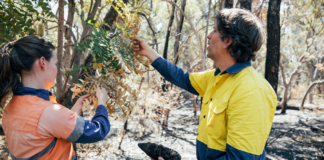
A farmer who has watched the rain patterns for forty years knows something a satellite model does not. A teacher in a public school knows something about youth radicalization that a security report might miss. We treat this knowledge as data, not just anecdotes.
3. We Write for Humans, Not Just Academics.
Scholarship is important. But if only ten people can understand it, its value is limited. We believe that deep ideas should be written in clear language. You should not need a PhD to understand global affairs. You just need curiosity.
4. We Are Open Access.
Knowledge should not be locked behind paywalls. If a student in Quetta cannot afford to read a report, the report has failed. All our content will be free to read, free to share, and free to learn from.
Joining the Conversation
This journal is not just a website. It is a workshop.
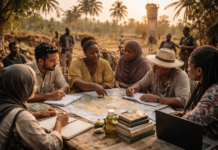
We invite students, researchers, journalists, and curious citizens to contribute. We do not need you to write like a professor. We need you to think like one. We need your questions. We need your data. We need your stories.
In 2026, the world does not need more noise. It needs more clarity. It does not need more of the same old maps. It needs new ones.
Presser Review is our attempt to draw that new map. It will not be perfect. But it will be honest. It will be rigorous. And it will be ours.
Welcome to the conversation.